The journey of one woman and her quest to find The Great American Beard, while showing her love and appreciation along the way...


Thursday, February 24, 2011

RIP Beard of the Day

Toy Caldwell - Marshall Tucker Band

Toy Caldwell was best known as the lead guitarist and main songwriter in the Marshall Tucker Band. A unique personality as well as a formidable musician, he was a peer of both Dickey Betts and Charlie Daniels, and his best work crossed effortlessly between country, blues, and rock & roll. A few years after the breakup of the Marshall Tucker Band in the late '80s, he re-emerged as leader of the Toy Caldwell Band, which played small-scale shows of the kind that the Marshall Tucker Band couldn't do. He also recorded one solo album before his death in early 1993. Although most of his fame inevitably rests with the Marshall Tucker Band, Caldwell left behind a small but glorious body of solo material. ~ Bruce Eder, Rovi


Source

Snow beard of the day

Nick Davis

Wednesday, February 23, 2011

Happy Birthday Beard of the Day

Peter Fonda
Actor, director, writer, producer. Born Peter Seymour Fonda on February 23, 1939 in New York City. Son of actor Henry Fonda and Frances Seymour Brokaw, who committed suicide when Peter was 11. His only sister, Jane, is also an actress. A brilliant student, Fonda left New York for Nebraska at age seventeen, where he entered the University of Omaha as a sophomore without even finishing high school.

Though he spent much of his childhood trying to live up to his famous father's expectations, it wasn't until college that Fonda broke into acting. After appearing in the Omaha Playhouse's production of Harvey, he moved back to New York, debuting on Broadway at the age of 21 in a production of Blood, Sweat and Stanley Poole. In 1963, he made his first Hollywood film, Tammy and the Doctor starring Sandra Dee.

With all-American good looks and a reputation that preceded him through his father, Fonda continued to play romantic leads during much of the early to mid-1960s. But in 1966, Fonda turned on his golden boy persona as he began to take on roles that were increasingly anti-establishment, earning him notoriety as both a delinquent and rebel. Such films included Roger Corman's The Wild Angels in 1966 where he played a motorcycle gang leader and 1967's The Trip.

In 1969, Fonda pushed the envelope even further when he produced and starred in Easy Rider as Wyatt "Captain America" Earp. Co-starring Dennis Hopper and Jack Nicholson as freewheeling, pot-smoking adventurers, the film became one of the era's cultural landmarks. But it also proved to be an unexpected commercial success, grossing over $19 million at the box office and earning Fonda an Oscar nomination for Best Screenplay.


Casting Fonda as a cult hero, the success of Easy Rider proved hard to live up to. In 1971, he teamed up again with Hopper for The Last Movie to lukewarm critical reviews. Increasingly, Fonda became better known for his activities off-screen than on. John Lennon's She Said She Said was reportedly inspired by a bad acid trip the musician had taken, during which Fonda repeatedly told him, "I know what it's like to be dead, man." In 1969, Fonda left Los Angeles to live in Montana.
His screen career continued its downward spiral during the 1980s, and was eventually eclipsed by that of his daughter, Bridget. But in the mid-1990s, he staged a comeback, starting with a cameo appearance in Bodies, Rest & Motion. In 1994, he had a starring role in Michael Almereyda's Nadja and created a self-parody in John Carpenter's Escape From L.A. in 1996.

Fonda's true comeback came in 1997 with Ulee's Gold, Victor Nunez's 1997 exploration of loss and family ties. He won raves for his portrayal of the title character, as well as a Best Actor Oscar nomination. Always one to play by his own rules, Fonda rejected mainstream Hollywood fare to next star in Steven Soderbergh's The Limey in 1999. He also appeared in The Passion of Ayn Rand as the author's long-suffering husband for which he received a Golden Globe for Best Supporting Actor.

Fonda was married to Susan Brewer from 1961-1972. They have two children, Bridget and Justin. He married Portia Rebecca Crockett (aka Becky McGuane) in 1975.

Source
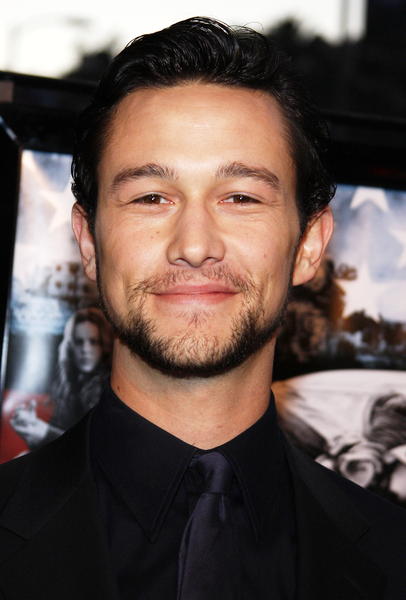
Joseph Gordon-Levitt

Joseph Leonard Gordon-Levitt (born February 17, 1981) is an American actor whose career as both a child and adult has included television series, theatrical films, and stage performances.

Beginning in commercials as a young child, he went on to appear in a number of television films and series, including a lead role in a television revival of Dark Shadows and a film debut in 1992's Beethoven. An appearance in A River Runs Through It followed, along with a starring role in the 1994 movie Angels in the Outfield, as Roger Bomman. Gordon-Levitt subsequently co-starred in the television sitcom 3rd Rock from the Sun (1996–2001) as the young Tommy Solomon, and had a major supporting role in the 1999 film 10 Things I Hate About You.

After a hiatus during which he attended Columbia University, Gordon-Levitt abandoned television but returned to film acting as an adult, appearing in various independent films, beginning with the 2001 film Manic, followed by the acclaimed roles in 2004's Mysterious Skin and 2005's Brick. In 2009, he played the lead role in the well-reviewed (500) Days of Summer, which gained him a nomination for the Golden Globe Award for Best Actor – Motion Picture Musical or Comedy. In 2010, he starred in the Christopher Nolan film Inception. He runs an online collaborative production company titled HitRECord.

Gordon-Levitt was born in Los Angeles, California, and grew up in Sherman Oaks. His family is Jewish. His father, Dennis Levitt, was once the news director for the Pacifica Radio station, KPFK-FM. His mother, Jane Gordon, ran for the United States Congress in California during the 1970s for the Peace and Freedom Party; she met Dennis Levitt while she was working as the program guide editor for KPFK-FM. Gordon-Levitt's maternal grandfather, Michael Gordon, was a Hollywood film director between the 1940s and 1970s, known for helming the 1959 Doris Day/Rock Hudson film Pillow Talk. Gordon-Levitt had an older brother, Dan, who was a photographer and fire spinner; he was born in 1974 and died in October 2010.

Gordon-Levitt joined a musical theater group at the age of four and played the Scarecrow in a production of The Wizard of Oz. Subsequently, he was approached by an agent and began appearing on television and in commercials for Sunny Jim peanut butter, Cocoa Puffs, Pop-Tarts, and Kinney Shoes.

Gordon-Levitt began his acting career at the age of six, appearing in several late 1980s made-for-television films, two episodes of the series Family Ties and in Quantum Leap Series 4 episode 5 "Permanent Wave". After having a lead role on the short-lived 1991 revival of the television series Dark Shadows as David Collins, he made his feature-film debut with a background role in 1992's Beethoven. Later that same year, he played a young version of Craig Sheffer's character in A River Runs Through It. At the age of twelve, Gordon-Levitt took the lead role of Gregory in the film Switching Parents, which was based on the true story of Gregory Kingsley, a boy who won the right to legally divorce his parents. In 1994, he played a Hutterite boy in the comedy Holy Matrimony and appeared in the lead role of the successful Disney film Angels in the Outfield. From 1993 to 1995 he had a recurring role on the sitcom Roseanne.

In 1996, Gordon-Levitt began playing Tommy Solomon on the sitcom 3rd Rock from the Sun, a role that put him on the map and for which he is most well-known.[5] The San Francisco Chronicle noted the coincidence that Gordon-Levitt was a "Jewish kid playing an extraterrestrial pretending to be a Jewish kid". In 1998, he was a guest star in the first season of That '70s Show, appearing in the episode "Eric's Buddy" as a gay schoolmate of Eric Forman's. During the late 1990s, he also appeared in several films, including The Juror (1996), Sweet Jane (1998) opposite Samantha Mathis, and the Shakespeare-based teen comedy 10 Things I Hate About You (1999), in which he and Heath Ledger had the male leading roles. He performed the voice of the main character Jim Hawkins in the Disney animated feature Treasure Planet (2002), which is a science fiction adaptation of Robert Louis Stevenson's adventure novel Treasure Island.


Gordon-Levitt was attending Van Nuys High School while acting on 3rd Rock from the Sun. During the 1990s, he was frequently featured in teenage magazines, something he resented. He has also said that during this time period, he did not enjoy being recognized in public, specifying that he "hates celebrity". As part of starring in 3rd Rock, Levitt appeared in five of NBC's public service announcements, The More You Know. His topics covered drinking while driving, peer pressure, hate crimes, staying in school, and violence prevention. He also appeared in the annual White House television special Christmas in Washington during the Bill Clinton administration in 1996, the thirteenth season of Celebrity Jeopardy! in 1996, The Daily Show on March 18, 1999, and in the Fox Family television special Dear Santa in 2002.

Gordon-Levitt left 3rd Rock from the Sun during its final season, becoming a recurring character and appearing in only half of the season's episodes. For the two years following, he quit acting and attended Columbia University (the only university to which he had applied). He entered in 2000 and attended from 2001 to 2004, studying history, literature, and French poetry in General Studies. Since his study at Columbia, he has become an avid and self-confirmed Francophile, and a speaker of the French language. He has said that moving to New York City (he currently resides in Manhattan's Lower East Side) from his hometown "forced" him to grow as a person. Gordon-Levitt dropped out of the university in 2004 to concentrate on acting again.

Gordon-Levitt has said that he made a conscious decision to "be in good movies" after returning to acting. Since the early 2000s, he has appeared in what has been described by the Boston Herald as a series of "acclaimed and underseen indies" that "pegged him as a rising star on the indie film circuit." Gordon-Levitt has received praise and positive reviews for his performances. Observing Gordon-Levitt's acclaim from critics and audiences alike, Showbiz notes that he has "defied the cliched fates that befall most underage actors when they grow up", while The New York Times has described him as "one of the hottest young stars in the indie firmament." Although he regularly researches his roles by exposing himself to real-life versions of the character before shooting, Gordon-Levitt does not label himself as a method actor.

His films include 2001's drama Manic, which was set in a mental institution, Mysterious Skin (2004), in which he played a gay prostitute and child sexual abuse victim, and Brick (2005), a modern-day film noir set at a high school, in which he had the lead role of Brendan Frye, a teen who becomes involved in an underground drug ring while investigating a murder. Brick received positive reviews, with The Minnesota Daily's critic commenting that Gordon-Levitt played the character "beautifully", "true to film's style", "unfeeling but not disenchanted", and "sexy in the most ambiguous way." Another reviewer described the performance as "astounding". His roles in Mysterious Skin and 2005's Brick prompted Salon.com to describe him as "one of the most interesting leading men in independent film, a thoughtful performer, simultaneously outspoken and introverted, who specializes in playing troubled characters at war with themselves and the world." He also starred opposite Steve Sandvoss as a young judgmental missionary in Latter Days (2003), a film that centers on a sexually confused Mormon missionary (Sandvoss) who falls for his gay neighbor. Gordon-Levitt had originally auditioned for Sandvoss' part, but was eventually cast as Elder Paul Ryder because of his good sense of humor and aggressiveness. In 2005, he also had roles in the youth drama Havoc and the critical failure Shadowboxer, a film about a terminally ill assassin, played by Helen Mirren, carrying out one final killing.

His next role was in The Lookout, where he played Chris Pratt, a janitor involved in a bank heist, which was released on March 30, 2007. In reviewing the film, The Philadelphia Inquirer described Gordon-Levitt as a "surprisingly formidable, and formidably surprising, leading man", while New York magazine stated that he is a "major tabula rasa actor ... a minimalist", and that his character worked because he "doesn't seize the space ... by what he takes away from the character." The San Francisco Chronicle specified that he "embodies, more than performs, a character's inner life." Several critics suggested that his role in The Lookout would turn Gordon-Levitt into a mainstream actor. His 2008 films include Killshot, in which he played a hoodlum partnered with a hired killer played by Mickey Rourke, and Stop-Loss, directed by Kimberly Peirce and revolving around American soldiers returning from the Iraq War.

He played a lead role opposite Zooey Deschanel in (500) Days of Summer, a 2009 release about the deconstruction of a relationship, which received positive reviews.[19] His performance, described as "the real key" to what makes the film work, credits him with using "his usual spell in subtle gradations." Variety's Todd McCarthy praised his performance, saying he "expressively alternates between enthusiasm and forlorn disappointment in the manner Jack Lemmon could". Peter Travers of Rolling Stone said the movie "hits you like a blast of pure romantic oxygen" and credited both lead actors for playing "it for real, with a grasp of subtlety and feeling that goes beyond the call of breezy duty." He was subsequently nominated for a Golden Globe Award. The same year, he appeared in Uncertainty, which details about a couple who thrust into two alternative realities by the flip of a coin, and his first blockbuster, portraying villain Cobra Commander in G.I. Joe: The Rise of Cobra, a live-action film of the toy series. In G.I. Joe Gordon-Levitt wore a mask and prosthetic makeup underneath it. After seeing concept art of the role he was being offered, he signed on saying that it was a once in a lifetime opportunity. He later explained that the film was a welcome relief after the heavy films he filmed in between 2007 and 2008. The movie grossed over $300 million,but received mixed reviews, with Stephen Whitty of Newark Star-Ledger calling it "incredibly silly". On November 21, he hosted Saturday Night Live.


In 2010, Gordon-Levitt starred opposite Leonardo DiCaprio in Christopher Nolan's science fiction thriller Inception, replacing James Franco in the role of Arthur, who is the "Point Man", Dom Cobb's (DiCaprio) partner and the person responsible for researching the team's targets. Inception received critical acclaim and was number 1 at the US box office for 3 consecutive weeks and has made over $800 million, becoming his most successful film to date. His other 2010 films include Hesher, an independent drama co-starring Natalie Portman in which he plays the title character who becomes a mentor and tormentor to a young boy. Other films he will appear in are Live with It, opposite Seth Rogen and Anna Kendrick, which is a dramedy about an adult male's struggle with cancer and Premium Rush, where Gordon-Levitt plays a bicycle messenger who is pursued by a dirty cop for information. While filming the latter he crashed into the back of a cab while riding a bicycle; the injury required 31 stitches. In addition, he will play the younger version of Bruce Willis' character in the time-traveling thriller Looper.

Thursday, February 17, 2011

Snow beard of the day

Colin Schneider

Winter Beards

           Matt Lee                                                          Merl                   

Wednesday, February 16, 2011

RIP Beard of the Day

Walter Brown "Brownie" McGhee

(born Nov. 30, 1915, Knoxville, Tenn., U.S.—died Feb. 16, 1996, Oakland, Calif.)

American blues singer, guitarist, pianist, songwriter, and longtime partner of the vocalist and harmonica player Sonny Terry.

The son of a singer and guitarist, McGhee developed an interest in the guitar at about age six and was taught by his sister to play the piano at age eight. He was impressed by itinerant blues musicians and dropped out of high school in the late 1920s to perform for carnivals, minstrel shows, dances, and informal gatherings throughout Tennessee. In the mid-1930s he led his own washboard band. McGhee first met Terry in North Carolina in 1939 and worked with him and the singer Paul Robeson in Washington, D.C., in 1940. Settling in New York City in the early 1940s, he roomed with Terry and the blues musician Leadbelly ( Huddie Ledbetter), and the three performed with Woody Guthrie and others as the Headline Singers. Terry and McGhee's partnership began in 1941 and lasted (with frequent interruptions) until the late 1970s. From 1942 to 1950 McGhee ran his own music school, Home of the Blues, in Harlem.

McGhee's first recordings were for the OKeh label in 1940; he later recorded extensively with Terry and others, exhibiting an authentic rural style. He appeared in Tennessee Williams' play Cat on a Hot Tin Roof on Broadway (1955–57) and toured with that show. McGhee recorded several motion-picture soundtracks, including that for A Face in the Crowd (1957).


Source

Happy Birthday Beard of the Day

LeVar Burton

Born Levardis Robert Martyn Burton, Jr. on February 16, 1957, in Landstuhl, West Germany. Burton's father, Levardis, Sr. worked as a photographer for the U.S. Army and his mother, Erma, was an English teacher. Burton's parents divorced when he was three, and he and his two siblings relocated to Sacramento, California, with their mother.


As a teacher, Erma instilled in her children the importance of a good education and a love of reading. Also a practicing Catholic, LeVar's mother sent him and his sisters to parochial school in order to provide them with religious instruction. Strongly influenced by his religious background, Burton entered the Catholic seminary at the age of 13 with the intention of becoming a priest. But after reading the works of philosphers such as Nietzsche and Kierkegaard, Burton had his doubts about the dogma. He left the seminary at the age of 17 and headed to the University of California on a drama scholarship instead.


Two years into his education at U of C, Burton auditioned for a role in writer Alex Haley's television show, Roots, which told the story of seven generations of Haley's family. Burton's life was forever changed when he was chosen for the lead role as slave Kunta Kinte. When Roots hit the TV airwaves in 1977, it broke all viewing records, and Burton became a poster boy for the discussion of race relations.


In addition to his performance in Roots, Burton appeared in several TV movies, including the Emmy-nominated Dummy (1979) and Guyana Tragedy: The Story of Jim Jones (1980). But his big reinvention as an actor would come in 1983, when he became the host of the Public Broadcasting System's Reading Rainbow, a show aimed at teaching young children to read. The series won five Emmys in its more than 20 years on the air, and Burton—who eventually became a contributing producer to the show in 1987—earned high marks from critics for his warm delivery. In 2005, he earned an N.A.A.C.P. award for his contributions to the show.


Already a household name to thousands of grade-school children, Burton became a household name for science fiction fans in 1987 as a co-star on Gene Roddenberry's Star Trek: The Next Generation. Playing the blind chief engineer, Lieutenant Commander Geordi LeForge. In 1993, he got his chance to direct an episode of the show, in which he cast Dr. Mae Jemison, the first real-life African-American female astronaut, as a guest star.


Since the cancelation of Star Trek in 1994, Burton has been directing film and television projects.


Burton currently lives in Sherman Oaks, California, with his wife, make-up artist Stephanie Cozart Burton, and his two children.

Source

Friday, February 11, 2011

Happy Birthday Beard of the Day

Mike Shinoda - Linkin Park

Michael Kenji "Mike" Shinoda (Japanese: 篠田賢治, born February 11, 1977)is an American musician, record producer, artist, and actor. He is best known as the rapper, songwriter, keyboardist, vocalist and rhythm guitarist of the rock band Linkin Park, along with his co-frontman and lead singer Chester Bennington, and as a solo rapper in his side-project, Fort Minor. He also provides artwork, production, and mixing for both groups.

Shinoda was born and raised in the Los Angeles suburb of Agoura Hills. His father is Japanese American, and his mother is European American.He also has a younger brother, Jason Shinoda. Shinoda attended Parkman Elementary and Lindero Canyon Middle School.

As per his mother's wishes, Shinoda began his classical piano training with lessons around the age of six, his enthusiasm eventually growing. At the age of thirteen, he expressed the desire to move towards playing jazz, blues, and even hip-hop. During his middle school and high school years, he added the guitar and, eventually, rap-style vocals to his repertoire.

After his teens, Mike Shinoda's rap interests found a source of encouragement in Brad Delson, with whom he started to write and record songs in a makeshift studio set up in his bedroom. Shinoda attended Agoura High School with Linkin Park bandmates Brad Delson and Rob Bourdon as well as with members of the band Hoobastank. By the end of high school, Bourdon had become involved in their musical ventures. The trio formed the band Xero, and began to make a more serious attempt to pursue a career in the music industry.

After high school, Shinoda enrolled in the Art Center College of Design to study graphic design and illustration. It was here that he made the acquaintance of DJ and turntablist Joseph Hahn, who, along with Delson's college-mate Dave "Phoenix" Farrell, was soon added to Xero's line-up. It was also here that he experienced a form of identity crisis. Years later, in an interview he said:

"I think it was probably in college that I realized that there was a difference between Japanese and Japanese-American. That's important to realize. It's not the same thing and then eventually with Linkin Park, I toured in Japan. I've been there now I think four times. I remember the first time I went, how familiar it seemed, just getting out of the plane, it smelled like my aunt's house, in the airport, it smelled like Japan. I don't know if anybody else even noticed it but I walked out of the plane and thought this is definitely familiar to me, didn't even see anything yet. And then going to Tokyo, Osaka, Kyoto, Nagoya, you just recognize things about the way people act, the small things that people do such as how you'll grab a piece of paper. There are things that are more obvious like taking somebody's business card with two hands. You don't do that in the States. When I saw somebody do that I went, "Oh yeah, my uncle always does that," you know. There are little things that culturally come from Japan but they also exist in Japanese American culture and it made me feel like the connection was there and I kind of hadn't realized how much of it was there."

At only 21 years old, Shinoda eventually graduated from college with a degree in illustration, securing himself a job as a graphic designer right after graduation.[1] With his background as a graphic artist, Shinoda has taken it upon himself in designing all of Linkin Park's artwork with Hahn, and has even designed the album cover for Styles of Beyond's debut album, 2000 Fold. In later years he would go on to showcase his art skills; he had his debut art showcase (Diamonds Spades Hearts & Clubs) at Gallery 1988 in Los Angeles in the time leading up to Linkin Park's album Minutes to Midnight.

Shinoda's band brought in second vocalist Chester Bennington, replacing Mark Wakefield. From the onset, Shinoda was closely involved in the technical aspects of the band's recordings, and over the subsequent releases that role continued to expand. Shinoda, with guitarist Brad Delson, engineered and produced the band's Hybrid Theory EP, and performed similar roles in the recording of the Hybrid Theory album. Mike executively organized and oversaw the band's remix album Reanimation (2002), contributing his own production remixes that he made in his home studio for "Crawling" and "Pushing Me Away." In his spare time, he produced and performed on a song by The X-Ecutioners entitled "It's Goin' Down."

On the second Linkin Park Warner Bros. studio release Meteora (2003) Shinoda continued to expand upon his duties as a musician and studio technician/engineer. Additionally, for the backbone of the album artwork, Shinoda collaborated with graffiti artist DELTA, graphic designer Frank Maddocks, and band-mate Joe Hahn.

By the release of the Linkin Park and Jay-Z 'mash-up' album Collision Course in 2004, Shinoda's involvement in the creation of the albums continued to grow. He produced and mixed the album, which won a Grammy Award for "best rap / sung collaboration" in 2006.


The band released their next album, Minutes to Midnight, on May 14, 2007. On this album, Shinoda shared a production credit with producer Rick Rubin, overseeing the musical evolution of the band's sound. This album was also the first time that Shinoda, best known for his rapping, sang a featured vocal. Mike sang in the songs "In Between" and the b-side song, "No Roads Left," as well as rapping and singing in the songs "Bleed It Out" and "Hands Held High." Despite the uncommonness of Shinoda-fronted singing tracks, Hit Parader ranked Mike at number 72 of the Top 100 Metal Vocalists of All Time.[8] Mike and Rick Rubin again shared a production credit for Linkin Park's latest album, A Thousand Suns, released on September 14, 2010.

Shinoda formed a side project named "Fort Minor" between 2003 and 2004 because he could not demonstrate as much of his hip-hop background in Linkin Park. He explained the name of his project in an interview:

“'Fort' represents the more aggressive side of the music. 'Minor' can mean a few things: if you're talking about music theory, the minor key is darker. I wanted to name the album rather than having my name on the cover, because I want people to focus on the music, not me.”

The debut album from Fort Minor, titled The Rising Tied, was released on November 13, 2005, and includes guest appearances from Styles of Beyond, Lupe Fiasco, Common, Black Thought of The Roots, John Legend, Holly Brook, Jonah Matranga, Celph Titled, and features Jay-Z (Shawn Carter) as an executive producer.

For the NBA 2006-2007 season, "Remember the Name", the second single from The Rising Tied, became the soundtrack for NBA Overtime on TNT. It was an NBA remix version, and remains the staple song for NBA on TNT to this day.[citation needed] Furthermore the Big East used "Remember the Name" as its theme song for the Big East Basketball Tournament in 2006.

He also scored a Top 10 smash with the surprise hit single "Where'd You Go", which peaked at #4 on Billboard Hot 100 chart.

After the release of the album, Shinoda also contributed to the iTunes Store by creating his own celebrity playlist.

Fort Minor won an MTV VMA for "Best Ringtone" in 2006, and was featured in the following films and TV programs (2005–2006 and 2010): Entourage, Boston Legal, Gridiron Gang, Freedom Writers, Friday Night Lights (TV), The Karate Kid, and Numbers.

Shinoda has also continued his Fort Minor musical style in an executive producer role on the upcoming Styles Of Beyond album, "Reseda Beach" He is contributing music and vocals to the album, which was slated for release sometime in 2009. However, the album has not been released till date and Styles of Beyond is under hiatus.

Mike was the youngest of his graduating class from Art Center College of Design of Pasadena in 1998, with a Bachelor of Arts in Illustration. He has had a hand in most artistic facets of Linkin Park's imagery, including album artwork, band merchandise, web design, and on-stage production art.

During time off in 2003, he did a collaborative "remix" shoe for DC Shoes, remixing the "Clientele." He reworked the colors and materials for the shoe, and additionally designed all the packaging and print advertisements. The following year, he also designed a customizable Kid Robot "Munny" doll for a charity auction.

In 2004, Shinoda created a series of ten paintings which became the basis of the Fort Minor album The Rising Tied. That series became the backbone for the packaging of the album, and was featured in Shinoda's first public art show "Diamonds Spades Hearts & Clubs." In addition to the ten Fort Minor pieces, the show also featured thirteen more original works and five collaborative pieces. “Diamonds Spades Hearts & Clubs” opened at Gallery 1988 on Sunday, November 19, 2006.

Additionally in 2004, Shinoda started a college scholarship at Art Center College of Design to benefit future illustration and graphic design students. Named the Michael K. Shinoda Endowed Scholarship, it is awarded based on financial need and merit. The scholarship was awarded for the first time in 2006. The scholarship fund is made possible through the sale of his original artwork on his website, art shows and his DC Shoes projects.

2008 has proved to be a busy year thus far artistically for Mike. On July 11, Shinoda’s second public art show “Glorious Excess (BORN)” premiered at the Japanese American National Museum in Los Angeles. The show included nine new pieces, with an exclusive signing on opening night. The show served as part one of the “Glorious Excess” two-part series, with the second installment “Glorious Excess (DIES)” due at JANM at August 22, 2009.

Concerning the inspiration behind the Glorious Excess series, Mike stated that it:

"Got to a point where the pervasiveness of “celebrity news” concerned me. It seemed like it has jumped out of its niche into places where it doesn’t belong. I would be watching the news, and thinking, “of all the things going on in the world right now, why are they covering so-and-so’s breakup?” It didn’t make sense to me. Add to that the fact that I’m supposed to somehow “belong” to that celebrity group—and I really don’t feel like I do in a lot of ways—and you can see how the topic started to become really interesting to me. The Glorious Excess (BORN) show was my way of diving into those topics, trying to find answers. It follows a central “celebrity” character, who is filthy rich, slightly violent, and famous without any particular skill or talent."

Also in 2008, Mike partnered up with DC Shoes again on a second DC Remix Series project. The project would feature a "great juxtaposition of Mike's unique influences: accomplished artist versus recording-breaking musician, American upbringing versus Japanese heritage." The MS/DC limited edition remix has two different versions - Xander and Pride. Roughly 2000 pairs of the limited edition shoes were made available for purchase when the sneaker was released on August 1, 2008.

In an interview with Sneaker Freaker Magazine, Shinoda had this to say about the latest DC Shoe project:

"This remix is a little slimmer than most of DC’s skate shoes; the Xander feels almost like the skate shoes I grew up wearing in the late 80s. But the art brings it up to date—my work is laser-etched into the panels on the side of the shoe, and the sole is a clear gum sole with a koi fish pattern, and four-color artwork beneath. That way, when you’re walking, and your foot lifts up, it’s a little surprise under there. We also took the time to add extra padding and a satin inner lining to make it as comfortable as possible. They come with three pairs of lightly waxed laces instead of two, because I like to flip up the look sometimes. Each pair also comes with a booklet of my art."

Source

Wednesday, February 9, 2011

Travis Tritt

Country musician. Born James Travis Tritt on February 9, 1963 in Marietta, Georgia. Though Tritt loved country music from a young age, it wasn't until 1982 that he began to seriously pursue his dream of becoming a professional musician. For several yaers, he recorded demo tapes with Warner Brothers and performed in small venues throughout the South developing his bluesy country-rock sound.


In 1989, Tritt released his first album, Country Club, which was followed by several platinum albums and chart-topping singles throughout the 1990s. Though the Nashville music industry was reluctant to endorse Tritt due his blatant rock-and-roll leanings, the musician continued to persevere with one success after another. Notable hits include "Can I Trust You With My Heart," "Foolish Pride" and "Here's a Quarter."


In 2010, Tritt signed a management deal with Parallel Entertainment to continue his music career.


Source